Picking the Right Partner: Smart Relationship Money Moves

In all of the books and blogs I’ve seen on personal finance and financial freedom, very few tackle the importance of partner selection in one’s wealth-building journey. Many are happy to live life single forever, and that’s cool, but the reality is that most people (85%+) in the world do eventually settle with one partner for an extended period of time via marriage or domestic partnership.

When beginning the journey to financial freedom/wealth generation there are three key audits that must take place:

1. MoneyAudit – Income vs. expenses each month. What is the gap? Grow the gap.

2. Internal Audit – Evaluate your goals at a soul level – what makes you come alive? How can you do more of that?

3. Relationship Audit – Be ruthless about your circle. Remove/avoid people who don’t embody embody the values that are important to you.

All 3 of these steps are vitally important, but this post is going to focus on the third – relationships, as I think this is an aspect of personal finance and financial freedom discussions that is often skimmed over. To be truly free, especially at a younger than standard retirement age, ot is crucial to be ruthless about your circle and remove/avoid people who don’t embody the values that are important to you. This is especially true for women, who often suffer disproportionately from unwise relationship decisions.

I remember watching a reality TV show once about a fundamentalist Christian family with 18+ kids and the father was speaking to one of his daughters about the young man who was courting her. He advised her to carefully evaluate the young man as picking her husband would be “the most important decision of your life.” At that time, I scoffed at such a sentiment judging it as chauvanistic and narrow-minded. A woman, a person, is much more than who they choose to marry! Right? Right?!

Fast forward 10-15 years…while I still disagree that choice of partner is THE most important decision of one’s life, I do now think, after some more years of life experience under my belt, that this is definitely one of the most important decisions you’ll make in your life. Not only the choice of life partner, but all of the key relationship choices that you make.

I’ve seen family members have a partner clean out bank accounts, including liquidating kids’ college funds due to addiction or infidelity. I’ve witnessed prosperous hard workers have their credit and financial stability destroyed during vengeful divorce proceedings. Show me your circle and I’ll show you your life. Show me your life partner and I’ll show you your future.

The bottom line is this: be careful with your heart and who you align yourself with. Of course, no one has a crystal ball and we all make mistakes sometimes and I’m a firm believer that you can always choose again if you accidentally make a poor choice. However, I think many people end up in avoidable financial holes by not taking the choice of partner (and friends) seriously enough. I’m guilty of this myself…luckily or unluckily, I’d seen enough financial disaster wrought by others’ broken relationships that I did know to arrange a prenuptial agreement prior to my own marriage.

If financial freedom is the goal, it is important when dating to evaluate whether or not a potential partner’s values align with your own. Everyone isn’t down with saving 50% of income, living frugally, or even paying bills on time. Before getting serious, ask crucial questions like:

  • Do you pay your bills on time or early?
  • What would you do if you suddenly recieved $50,000 with no string attached?
  • Do you have student loan debt? credit card debt? How much?
  • What are your earliest memories about money?
  • Do you have a savings account? An emergency fund?
  • What are your 5, 10, and 20 year life and money goals?

These questions might seem unromantic, but note that this isn’t an exact script to follow. Instead, think of these as suggestions of the TYPES of things you should consider before linking your life to someone permanently. Also, get a prenup. It isn’t romantic but it is important insurance in case life throws your a curveball. Don’t let a poor partner choice derail your freedom plans.


Choose the Path that Feels Good Over that Path that Looks Good

When you’re young and/or you don’t have a lot of life experience, making major life decisions is often difficult because what feels right to you internally doesn’t always align with what parents, society, and friends are urging you to do. I wrestled with this and learned the hard way that making decisions guided by the approval of others leads to misery.

In an earlier post I wrote about the first life-changing, strong intuitive hit I received when I was a high school student visiting NYC with my parents. What I left out is that I felt that “this is where you’re supposed to be” pull at Barnard College, the women’s college of Columbia University. When I stepped foot on Columbia’s campus, I didn’t like it – it felt big, cold, and impersonal. However, I applied to both and was fortunate to be accepted to both. I prefered Barnard and my intuition was pulling me there, but everyone around me said, “If you get into Columbia, you go to Columbia.” They also gave me more scholarship/grant money.

This was the first major life decision I made largely based on logic and the opinions of others and I suffered for it. Columbia College was exactly what my intuition told me it would be: cold, impersonal – an easy place for a quiet girl from MN to get lost and I did. I was lucky in that Barnard and Columbia are both a part of Columbia University so I was still able to take classes at Barnard and mingle with the students there. Ironically, by my senior year, most of my classes were at Barnard and by graduation, most of my close friends were Barnard students rather than those at Columbia College. I never fit at Columbia College but let the need for the approval of others guide me there. I spent the next 9 years making life and career decisions using that faulty compas of external validation.

I pursued the internships, jobs, and companies that looked most impressive – my first job out of college was at TIME magazine! I was only interested in dating men who worked at investment banks and had preferably graduated from ivies or top tier schools…and I was a mess. I rose up the ranks at work but was pretty mediocre in my roles because I was choosing what LOOKED good rather than letting my natural gifts and instincts guide me. My romantic relationships were garbage because I was dating resumes rather than people. I missed out on several golden opportunities during that time because of my shallow obsession with what soceity deemed “success.”

Eventually though, I started to wise up. The whispers of the universe got louder and louder until I could no longer ignore the fact that the choices I was making were not in alignment with my inner guidance. Buying my co-op in Harlem was my first minor flext against others’ perceptions as most of my bougie friends and colleagues thought I was crazy to buy in that part of town. My gut was screaming to me that the place was special, though, and my mom also visited and gave it her blessing, so I pushed forward.

The next test was a couple of years later when I was given the opportunity to go to graduate school. Many of my friends from undergrad were dishing out big bucks to go to big name grad schools like Duke, Wharton, and Yale. I was in a very specialized field of market reserach and enjoyed it, so despite peer pressure to get my MBA – my own analysis didn’t support taking two years out of the workforce to get a generic degree. Nonetheless I applied to 3 programs: UCLA, Northwestern, and The University of Georgia. I got into all three…UCLA gave me zero money, Northwestern offered a 50% grant, and UGA gave me a full ride plus a living stipend of $1,000/mos. The program at Georgia was also just one year so I’d be back into the work force more quickly.

I dragged one of my New York besties to Atlanta with me to visit. We drove the 45 minutes to Athens, GA and she HATED it…she hated Atlanta too. I felt an odd sense of connection to the place. It wasn’t an immediate “I love it” but more of a gentle “I could live here.” I prayed on it, I did the math, I looked at things logically – Georgia made the most sense. I still agonized over the decision, my friends all thought I was crazy, to them no one left New York to move to Athens, GA and no one passed up Northwestern for UGA. My parents (the most wonderful parents ever), drove with me to Athens to get settled. I needed to buy a car and find a place to live. I remember sitting at Panera bread and crying like a baby – so overwhelmed by the weight of going against everyone’s expectations. My dad had wanted me to stay in New York. My mom had wanted me to go to Northwestern, where her own parents had met while attending grad school.

The tears passed and I went on to have one of the best years of my life at The University of Georgia. I loved Athens, I loved Atlanta, I loved my classes and professors. I loved UGA and the infectious school spirit that radiated the campus. This was my first lesson in how powerfully the universe rewards us when we follow internal guidance. The great recession started right as I was graduating, so if I had done an expensive 2 year program I’d likely still be in debt. Instead, I got a solid six figure job in my desired industry and moved on with very little debt. I eventually settled back in Atlanta and discovered a life infinitely happier and more soulful than anything I had in New York. I connected with people based on mutual interests and personality rather than resumes and that led to meeting my spouse and a wonderful circle of supportive friends.

Now, whenever I need to make a major decision – beyond looking at the hard facts (those matter too), I take several moments of deep meditation/prayer to try to understand how each choice makes me feel. No matter how appealing or prestigious something is to others, say no to anything that doesn’t feel as good as it looks. This is one of the most important lessons that the universe wants all of us to learn.

Tips to guide your discovery process: make a list of past life decisions you’ve made – were they guided by YOU or the opinions of others? Focus especially on the decisions that have yielded the most joy and those that led to the most unhappiness/discomfort. From there, rewind and try to remember how you felt when making each of those choices – were there signs from the universe that you may have missed? Did you override a quiet voice within yourself? Identify the cues from your past and make a promise to yourself to listen and follow that guidance moving forward. The universe will take care of everything else.

Intuitive Investing: Using Your Gut to Grow Your Bottom Line

Most people use Excel spreadsheets, financial models, and other quantitative data when making investment decisions. I love all of that stuff and use it too. However, one aspect of investing, particualarly real estate investing that is rarely mentioned is intuition.

It sounds crazy, but I’ve built a million dollar plus net worth relying just as much on intuition as I have on cold, hard data. I think a lot of successful investors leverage intuition but are afraid of sharing that secret for fear of being labled cooky or “woo woo.”

That said, I’m endeavoring to be as honest as possible in this blog, so I’m going to try to explain how I’ve leveraged intuition in my investment decisions in hopes that it will encourage you to hone your own intuition as an additional tool in your investment decision making arsenal.

I’ve always been a fairly intuitive person and grew up in a family that both accepted and encouraged “supernatural” senses, so perhaps tapping into this sense is a bit easier for me than the average joe. Nonetheless, I’m convinced that the creator endowed each of us with a healthy dose of intuition and it’s there for each of us to develop and leverage.

In my case, it manifests as a feeling, a KNOWING. I felt it when looking at colleges with my parents. I grew up in Minnesota and had a very negative opinion of New York but my parents had work in the area and insisted we drive around and look at schools in the tri-state area since they needed to be there anyways. The minute my foot hit the pavement in the Morningside Heights neighborhood of Manhattan I felt it…a deep, definititive intuitive hit that this was where I was supposed to be. I looked at my mom and said “Oh!” because I was struck speechless by the intensity of the sensation. My parents looked at each other and said “Oh no.” LOL. It wasn’t what any of us had wanted or expected for me, but I felt it and they witnessed it and we flowed with what was clearly something bigger than any numbers on a sheet of paper. That sensation was so strong that I filed it away and always take note when it hits.

That’s really what intuition boils down to – listening to your body and learning to interpret what it is trying to tell you. Some hits are very intense and clear…others are more subtle, but if you pay attention and note the patterns, you’ll see that the messages are consistent. I’ve learned over the years that when I’m in a career situation that is wrong for me or around people who don’t have my best interest in mind – I get nauseous or my stomach hurts. It sounds crazy but that’s just how my intuition speaks to me about what is “wrong.”

When something is right or meant for me, I get a tingly excited feeling and a deep sense of “this is IT.” I felt that feeling with my first property in New York and it made me a wealthy woman, so now, when I look at real estate investments – especially in a market I’m unfamiliar with, I will study all of the data and run all of the numbers and then I drive the area and walk around until I feel that intuitive hit. 9-10 units later after that first Harlem purchase, it has never failed me…I don’t invest in any neighborhood where I don’t feel that tingle. I can’t explain it, though I’m trying to here, but it is real for me and I trust it.

Don’t get me wrong, though, I don’t rely on intution alone. The numbers have to work. You have to do your research. You have to do the work. In the case of cash flowing real estate investing, that means first analyzing:

  1. the neighborhood – surrounding businesses, crime rates, proximity to city center/amenities, proximity to public transit, overall appearance, etc.
  2. the tenant stock – place a free dummy rental ad online pulling photos from the online sale posting and general location and see what kind of tenants you get for the price you’d need for the unit to be profitable (bare minimum is rent of 1% of purchase price to be worth further consideration). If you don’t get any responses, the place is overpriced or undesirable. If you get a ton of responses you can likely raise the listing price. If the quality of respondents in poor, it might not be an area you want to invest in.
  3. the building/house/condo – do a careful inspection and make sure you have a full understanding of what you’re getting into. I prefer to buy places that need less than $10k in repairs/improvements to be move-in ready, but always have an ample reserve on hand just in case.
  4. the overall numbers – does the rent/purchase price ratio meet the 1% rule? what are vacancy rates in the area? how much will it need to be move-in ready? I also look at things like property taxes, insurance rates, and local zoning/rental laws. Check out biggerpockets.com for more tips on the quant side of evaluating a potential real estate investment.

From an intuitive investment perspective, I like to look for undervalued areas that have all the ingredients of the most desirable and expensive parts of a given city. That’s what I noticed about Harlem – even when it was still considered a slum, it had beautiful brownstones, ample storefronts/restaurants, park space every few blocks, and express trains that take one to the heart of the business districts in 15 minutes. It’s also part of Manhattan. I would look around baffled that no one else was seeing what I saw – VALUE, beauty, specialness, convenience. One reason many couldn’t see the things that I saw was becuase Harlem was a neighborhood populated by lower income people of color. This is often the case in many cities and presents a unique advantage to investors who are able to see/feel beyond what soceity values to the core of a place. This is especially true in space starved areas like Manhattan, so I was lucky and saw my intuition quickly proven right when my first property value quadrupled just two years after I purchased it.

Fortune favors the bold and those who hone and trust their instincts.

When Opportunity Knocks, Answer

“Sometimes the safest choice is the riskest.” – Unknown

Looking back on some of the most pivotal moments in my life and career – they all have one thing in common: FEAR. In all of the key moments that have given me major economic boosts: buying my first place, switching career paths, leaving NYC to get more schooling in Georgia, and investing in rental property, there was a degree of unkown/risk that was scary. I had people in my ear cautioning me not to take the leap, but in each of those pivotal moments, I trusted my gut and pushed past the fear.

These decisions all seem rather minor in hindsight, but I remember agonizing over them at the time. I don’t know about you, but I find uncertainty terrifying. It’s tough to leave behind what you know or what everyone else is doing in order to follow a different path. That said, the universe has shown me repeatedly that fortune truly does favor the bold. I’ve seen so many peers watching cautiously from the side-lines complaining about cities they hate, jobs they detest, partners they despise, but they are too scared to make a move.

If you don’t like your job – explore your options and get a different one. If you hate the city you live in, for God’s sake – MOVE! If your partner isn’t a good fit, part ways gracefully. Life is too short and too precious to waste time with people or in places that don’t give you joy. These moves aren’t easy, but those moments when you feel close but not quite ready are the deciding factor moments. In my head I picture it sort of like climbing a steep mountain – the next handhold is in your sights and you can just reach it with the tips of your fingers…that’s exactly when you need to take the calculated risk and jump.

If you wait too long where you are, you might be too exhausted to make the leap and properly grasp the next handhold. In life, I’ve seen this happen where a golden opportunity opens up and watched dear friends talk themselves out of action: I’ll wait until I have more money saved, I need a bit more time in my current role, or the one I hear most often “I’ll do it next year.” Next year comes along and circumstances have changed unexpectedly – the golden window of opportunity has closed and the person is kicking themselves “I should’ve gone for it when I had the chance!”

I have so many examples of this phenomena in my own life that it is difficult to select just one example…since I’ve shared a bit about real estate and investing already, this time I’ll share a W2 career example. When I was in my late 20s, I was back in my hometown working for one of the largest, most respected companies in the region. I hated where I was living and I hated the uptight corporate culture of my job. I learned a lot and made some wonderful friends, but I was pretty miserable – nothing about the situation aligned with my spirit, but I spent 3 years suffering quietly for fear of looking like a “job-hopper.” Then I hit rock bottom: my miserable relationship of 2 years had just ended (felt like the end of the world since I was pushing 30), I was in a city I didn’t like, I hated my job – to top things off: I woke up New Year’s day to below zero temps with half of my face paralyzed! It was like the universe was refusing to let me fake smile through this mess of a life anymore. My life sucked and I needed to make a change, but I was sooo scared! The economy was in the dumps and I was terrified by the prospect of starting over in a new company and/or city.

That said, I did the work. I kept killing it in my current job. I started working out and meditating 30-60 mins each day. I mentally focused on the life I wanted while making the best of the life I had. While my face was still paralyzed (Bells Palsy – only temporary, thank goodness!), an ad agency in Atlanta that I’d visited with my class in grad school reached out about a Director level role on their team. I’d loved this place and the people and recalled telling my classmates that it was exactly the type of place I’d like to work. So, basically my dream company called out of the blue offering me a role 3 levels above my current one in my dream city.

Ironically, I almost didn’t move forward with the interview process because I didn’t feel qualified. My peers and mentors didn’t feel I was ready, but I went for it and I got the job and two months after waking up with a half paralyzed face (it miraculously went back to normal just in time for the in-person interview rounds) and a life I hated, I moved to Atlanta and started my new job. I LOVED it. I loved (and still love) Atlanta, and I met the man who would become my husband the same week I moved to Atlanta. I pushed past the fear and the universe gave me a giant pat on the back.

So please trust me when I tell you that fortune favors the bold and the well-prepared. If the universe presents you with a golden opportunity – take it! You’ll rarely have the luxury of 100% confidence behind most big moves, there is always an element of risk. So, if you feel ~80% ready, my advice is to go for it. Worst case scenario, you fail and you learn valuable lessons. The beauty of failing is that once you survive a couple of setbacks you become braver because you’ll realize that failing isn’t the worst thing that can happen – not trying and saying “if only” or “I should have” is actually much worse.

How I Bought a 2bdrm Condo in Manhattan Making Less Than $40k/year. Hint: You Can Do It Too!

Cash flowing real estate ownership has been a huge (and largely accidental) part of my journey to financial freedom. I’ll share this portion of my story with the BIG caveat that real estate isn’t for everyone and it doesn’t always work out for everyone. That said, the fact that I was able to make it work with zero knowledge on a tiny salary ($35-$40k) in one of the most expensive cities in the world (New York), should give you hope that if you so desire and you do your homework, you have a very strong shot at getting a boost along your path to freedom via real estate, you can do it. If you read this portion of my story and it doesn’t resonate with you, no problem, it doesn’t have to be real estate – you can choose whatever you’d like as long as you have an addditional stream of income, or two, or three, or four, or five in addition to your W2 “cubical” income.

As for me and my house – I chose real estate as my catalyst to financial freedom. Looking back on it, though, real estate kind of chose me. I didn’t set out at 23 to become a millionaire by investing in real estate, it sort of just happened once I got a taste of the glory of passive rental income after buying my first property.

For me, my entrance to property ownership boiled down to a combination of good savings habits, frugality, and a love of Harlem. I was in my early 20s living in NYC – a lovely little neighborhood in northern Manhattan called Harlem. My first place was a basement room with no windows in a beautiful 3 level brownstone right across morningside park from my alma mater, Columbia University. The rent was $500/mos including utilities.

In hindsight, that first move out of college to live with house mates and take a cheap basement room was my first step towards freedom. It allowed me to save a ton of money each month. I didn’t make a ton – my first job paid $35k/year, but when your rent is only $500/mos including utilities, you have plenty of wiggle room. I was also lucky to have some help from my family paying for college, so I only had about $10k in student loans. My only bills at that point were rent, student loans (~$200/mos), food, a monthly metro card for public transit ($63/mos), cell phone, and a small fun budget. If you’re in your early 20s right now – please SAVE and continue to live like a student for as long as you can tolerate…this will help you gain your freedom faster.

I looked up and 2.5 years after gradtuation I had almost $25,000 in my savings account! At this point I’d moved out of the basement and had been living for about six months in my own, very shitty, one bedroom apartment where the rent was $850/month. I was still in Manhattan/Harlem, but had moved about 30 blocks north. It wasn’t as nice as the brownstone, but it was all MINE and it was on a beautiful street called Convent Ave that I loved to stroll every evening after work – who needs a gym in Sugar Hill?

At this point I’d shifted roles at work and amped my income to about $40k. Out of boredom, I started browsing craigslist and the neighborhood for apartments for sale. I knew I wanted something nicer, but I told myself if I was going to pay more than $1,000/mos for housing, I wanted it to be a mortgage rather than rent.

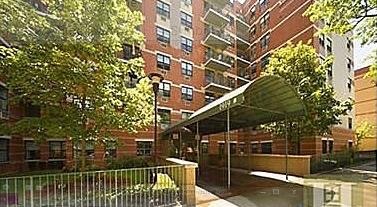
After months of looking, I spotted a 2 bedroom/1 bathroom co-op on Madison Avenue for $145,000. That was just barely within my budget so I contacted the lister and set up an appointment to view the place during my lunch break. I’d lived in Harlem for years but hadn’t ever been to that particular pocket…it was a bit further east than me and my crew usually ventured. I got off the train on 125th, it was a quick 15 min ride from work, and walked 2 blocks to the building – it was lovely…across from a park and with a doorman. The owner buzzed me in and I saw a clean lobby, a courtyard, and a laundry room. All of these things are GOLD in NYC. Then they let me into the apartment, it was was ugly – dirty powder blue carpet and piles of junk lining the walls from a previous tenant. All I saw was SPACE (1,000 sq ft) and a park view from every window. I wanted it.

The bad news – it was a strict co-op and they’d already rejected 4 previous applicants. They wanted someone with stable employment able to put 25% down (and have reserves) with a 700+ credit score. Also, while I could just barely afford the mortgage at $145,000, there was also a $973/mos HOA/maintenance fee! I sadly told the owner that I loved the place and met all the other requirements, but that the price + the HOA fee + student loans was too much for me. I kept looking but also kept thinking about that apartment and crunching numbers to see how I might make it work. As it turns out, my genuine brokeness was a great negotiating tactic! The realtor called me a week or two later and said “Can you make it work for $100k?” Um, yes, yes I can!

All that saving and scrimping came in handy – I had almost exactly 25% down. My many years living in Harlem (no where else would take me – yay racism!) and love of the neighborhood helped the board be assured that I wasn’t a speculator. My parents had just sold their home and were able to loan me a bit of cash to show that I had a cushion in my account after the purchase. I returned that within the year. The ugly carpet and tenant mess kept others from seeing the unique value of the place. Several co-op board interviews and almost 6 months later, I owned my first home!

Turn Set Backs Into Set Ups

I was in my early 20s living in NYC – a lovely little neighborhood in northern Manhattan called Harlem. My first place was a basement room with no windows in a beautiful 3 level brownstone right across morningside park from my alma mater, Columbia University. The rent was $500/mos including utilities. At first my space wasn’t much – a large partially finised and partially finished basement in a great area. My mom and I love decorating and stoop sales, however, so we took a long weekend and turned that place into a GEM. With the help of a friend with a car we laid down a neutral carpet remnant, painted, and decorated the space.

The space was so large that I put up some folding Japanese folding screens (stoop sale: $10/each!) and had a separate sleeping and living room area. The previous tenant had left behind his couch and bed so all I needed to do was bring my dorm TV and a clothing rack. It was also deliciously cool during hot NYC summers at a time when no one I knew had A/C or could afford it. I shared the kitchen, 2 bathrooms, and an upstairs living room and dining room with two housemates. My mom and I made the place look so nice that 3 months into my tenure, the girls who ran the place decided to raise my portion of the rent! What jerks. After much negotiation, we agreed on $533/month.

In hindsight, that first move out of college to live with house mates and take a cheap basement room was my first step towards freedom. That said, I have to be honest – I didn’t make that move because I had a crystal ball into my financial future OR because I was trying to save money. I moved there because no one else would take me. I graduated from an Ivy League school with good grades and my chosen roommate and I got turned away from every apartment we applied for. The final straw was an apartment we applied to on 165th street (an undesirable area at the time) – even though I’d witnessed drugs being sold from the building and also was warned by police raiding the bldg NOT to move there…we were desperate for a place to live and the apartment was beautiful, $700/mos each and 2 blocks from the subway. We applied and got it…until we showed up to sign the lease. The building owner saw two young black women and said we could no longer have the apartment. The landlord said something about trying to “change the building.” We couldn’t even get an apartment in a drug bldg! I can laugh at it now, but at the time it was pretty devastating.  It feels like a personal rejection when people repeatedly tell you they don’t want you to live in their property.  It wasn’t personal, though – they just saw two young black women with no rental history and felt we weren’t a good bet – wrong!

Racism and ageism were alive and well, but in a way, it was a blessing in disguise as it forced me to think outside the box and (after many more rejections) I finally found my basement oasis. Sometimes a set back turns into a set up – living in the furnished basement unit saved me thousands in furniture, at least $250/mos in rent and utilities, plus it was a 5-10 minute walk to campus so I could still use the computer lab in the student center for free. It was also walking distance from one of my best friends and 30 mins closer to work than the trap house.

Lastly and most importantly, getting a furnished place for $500-$530/mos with utilities included rather than $700+ utilities, furnishings, etc allowed me to comfortably save hundreds of dollars each month.  I didn’t know what I was saving for, I just dutifully put aside all that I could after paying rent and student loans.  I knew that one day soon I wanted my own place and perhaps a car, but didn’t have many goals beyond that.

Looking back on this time, what felt like set backs at the time – not being able to qualify for an apartment and being rejected every time I tried to move outside of Harlem, actually turned out to be God’s set ups for something special.  I was able to save money and live in an area I loved (I wasn’t very welcome in most other areas) – I looked around and saw untapped beauty.  I built a community and I SAVED.  Then a couple of years later, the opportunity came for me to buy my piece of Harlem and I took it.  At that point I’d spent years combing every piece of my chosen/forced neighborhood, so I knew and felt a good thing when I saw it…my senses were fine tuned as was my understanding of the local economy.  This allowed me to make a great investment.  I (trembling all the way) put all of my savings into buying a huge 2 bedroom in a doorman bldg. with parking and a courtyard across from a lovely park and a couple of blocks from multiple major subway lines.  Many, if not most, considered Harlem little better than a slum at that point, but I knew better because I lived there. Always bet on black – I bet on Harlem and it made me a millionaire 😉

Follow the Money and Your Gut: How to Make Wiser Financial Choices

I heard an interview with the one of the pioneers of the FIRE movement, Vicki Robbins, who wrote the book, “Your Money or Your Life”…the book puts forth the POV that money is essentially life energy. For every item you buy or spend money on, you’re actually exchanging your life energy. For example, if you buy a $500 handbag or pair of shoes and you make $10/hour, you’ve just spent 50 hours of your life on that purchase. So, when you think in that context, it makes you ponder not only whether or not you want or need the handbag but also – is it worth 50 hours of your life energy?

As we discuss the journey to financial freedom and all the steps along the journey – saving, budgeting, setting priorities, investing, etc, I think Vicki’s list of key questions to ask oneself as you navigate purchase decisions are really helpful:

  • Is the life energy that I’m spending to buy this item worth it? Does it yield enough happiness to be worth the life energy that it costs?
  • Is this (purchase, choice, etc) taking me in the direction that I want to go?
  • If I didn’t have to work for money, would I be buying this?
  • If everybody did this or bought this, would the world be a better place?

Budgeting Tips: You Can Save a Ton and Still Have a Fun Life

A key aspect of getting financially free, is to become ruthless in your prioritization of what really matters. How badly do you want to be free? How badly do you want that latte or that new dress?

If you’re early in your career or earnings journey, your sacrifices and tradeoffs will likely be larger because there is less excess to save, so you’ll have to be creative to create room in your budget to allow for a higher saving rate (remember, a high savings rate is crucial to getting free).

Some things that helped me save $25k in about 3 years while making less than $40,000/year while living in Manhattan:

  • Set fun and food budgets in cash. Back in the early 2000s, I gave myself a budget of $60/week for fun and food. I would take it out in cash at the beginning of the week and allowed myself the freedom to spend it however I wanted, but when it was gone, it was gone – no more fun, no more food. It sounds harsh but it worked!
  • Cook or learn to cook: I taught myself to cook all of my favorite dishes so that I could eat what I wanted without going to pricey NYC restaurants. God bless my friends who sat through my early efforts to perfect lasagna and other dishes!
  • Cook strategically: Make a list of the cheapest, healthiest, most filling dishes you know how to make and create a rotating menu. For me those things were things like tacos, lasagna, spaghetti and other past dishes, jambalya, chili, loaded baked potatoes, and breakfast for dinner.
  • Shop by list and menu only: Choose 1-2 dishes you’ll make for the week and then make a list of all the ingredients needed for those dishes. Only buy those ingredients on your list. Avoid items like cookies, sodas, and chips – they are extra calories and expenses you don’t need!
  • Be intentional about fun and discretionary spending: even though I was on a tight budget, I still managed to go out with friends multiple times per week and even get my hair done regularly. How? by planning ahead…women usually get into NYC clubs and bars for free, so my friends and I made it a point to only go places without cover charges. I only went out during Happy Hour and only bought what was on special. I was generous with accepting dates and free drinks when offered 😉 The Dominican hair salon across the street from my house offered a $10 wash and blow out special on Mondays, so guess when I got my hair done? Yep, on Mondays.

Save Like a Squirrel

This will surprise a lot of people, but I would say one of the top reasons I’m financially free and a millionaire in my 30s – as a black woman in America without an inheritance or special perks – is simple: I’m a saver. Saving is one of the first and most important steps towards the north star of financial freedom.

I’ve always been a saver and I’ve always liked to stack my coins. The family joke is that my brother who is 10 years older than me first borrowed money from me when I was 6 and he was 16. That really happened. My own family has illustrated to me that saving doesn’t come naturally to everyone, but the fact that it came naturally to me has been a blessing and the good news for you is that it absolutely a skill that can be learned!

How to save your way to financial freedom:

Run your numbers: create a basic tally of your budget. What is your income each month? What are your FIXED (food, housing, transportation, phone) expenses that you need to live? What are your variable expenses: fun/going out, cable, clothing, etc? Subtract your monthly fixed expenses from your monthly take home income – how much extra is there? Run that same calculation with your variable or optional expenses – how much extra is there? From here, calculate the percentage you can save (ex. $1,000 income – $500 expenses = $500 extra, $500/1,000 = .5 or 50%). If that % is less than 15% of your take home pay, I’d recommend seeing what you can cut to get to at least a 15% savings rate per month. Trust me, you CAN do this and you have to do this if you want to be free. I managed to save $25,000 in two years while making $35,000/year living in Manhattan. If I can do that, you can save 15% of whatever you earn.

Automate your savings. This step is crucial. Once you figure out how much you can save, set it up with your bank so that shortly after your paycheck is deposited into your checking account, a set amount (at least 15%) goes immediately to your savings, every single check. Once you automate, the money starts to pile up quickly. Make a promise to yourself not to touch those savings unless it is an absolute emergency and if you do take something out, you have to replace what you borrowed from yourself within 3 months.

Set a goal. Your goal could be to save 6 months of living expenses for an emergency fund, a down payment for a house, or perhaps enough money to buy a car in cash. Whatever motivates you to keep saving like a squirrel.

Optimize. Find the highest interest rate account that you can OR one that generates points. In my case, I started my savings with a basic Citibank savings account because I found it easiest to do my automatic transfers and track my progress within the same banking interface. Citibank also had a good rewards program at that time that allowed my to double and triple my monthly rewards by having multiple active accounts, so I ended up making up in points (that then translated to airline tickets and rental cars on my travel adventures) what I was giving up in interest. Find the account that works for you and then stick with it.

The reason saving is so important is that it positions you to be ready for opportunities when they strike. I wasn’t planning to buy an apartment in NYC at 24, but I saw an amazing deal and just happened to have squirreled away $25k, the exact amount needed for the down payment. That apartment went on to cashflow an income after expenses of over $12k/year and then made me a profit of hundreds of thousands of dollars when I eventually sold it years later – all because I had saved like a squirrel. Saving is a habit that will set you up well for wealth generating opportunities.

Happy saving!

What’s Your Money Story?

We all have a money story and understanding yours is crucial to building a strong and prosperous financial future.  Some of your financial habits are innate (I’ve been a saver since day 1) but many are learned.  The more you understand what shaped your views on money, the better you’ll be able to structure your future choices in a way that is both sustainable and profitable.

My money story begins in a relatively frugal middle class family in Minneapolis.  my parents are African-Americans who migrated to the far north for better job opportunities.  They met in college and had middle-management corporate jobs.  Ironically, for a good portion of my growing years they were both managers at the same company, just in different departments.  Dad was in compliance, mom in HR.  We lived modestly – no big houses or flashy cars.  My mom cooked dinner every night and she and I cleaned the house every other weekend.  We didn’t have everything, but I never wanted for anything.  Despite the local public school being across the street, they paid for my brother and I to go to parochial school. Both being products of catholic education – they believed strongly in investing in their children.   

I’ve been a saver and money accumulator for as long as I can remember.  My only brother is 10 years older than me and it has been a running family joke that he first borrowed money from me when I was 6 and he was 16.  I’ve just ALWAYS stacked cash.  My parents would give me a small allowance and I would double it hustling neighborhood kids who knew how to count but didn’t understand the value of money – “I’ll give you FOUR pennies for TWO quarters” hopefully that won’t put me in hell, lol. Looking back, I reflect on the money values instilled in me: 
– saving is good
– investing in education is important 
– family time is priceless
– no need for flash 

My parents always chose a life that felt good over one that looked good – driving Toyotas and minivans when their friends were pushing Mercedes and living modestly in the city when everyone else aspired to a McMansion in the suburbs.  I also learned from my mom how to shop sales and stretch a dollar.  She prides herself on never paying full price for anything. I’m not great at math but can calculate percentages in my head like a human calculator due to her drill sergeant like methods in the grocery store (what’s our total if this is 15% off of $8.99 and I have a coupon for another 10% off?)

The only negative experiences I can recall with money were around a stigma related to being either “rich” or “poor” – where I grew up most folks were in the middle and anything else was undesirable.  I recall kids saying I was rich and being deeply embarrassed by that.  We were NOT rich, but lived in a world where most black people didn’t have much, so by the time my family was living in a two bedroom condo downtown that had a courtyard with a pool, other kids assumed we were doing big things.  Looking back, though, it was a modest life.  A family of 3 (4 when my big brother was in town) living in a 1,000 sqft 2bd/2ba.  We went down 20 flights to the basement to do laundry…it really wasn’t that fancy, but it was in the heart of downtown Minneapolis and gave me a ton of freedom because I was able to walk to anything and everything I needed – groceries, restaurants, library, shops, church, and even the movies.
I’m blessed to have started life with a healthy relationship with money and I’m eternally grateful for the financial seeds my parents planted.  

Key questions to ask yourself as you start on this journey to freedom:
What is your financial story? 
What are some of your earliest money memories?
Are you a natural saver or a spender? 
Did your family/community have a healthy or warped relationship with money?  

Consider what comes naturally to you and what was taught.  Consider the elements you are missing and what you’d like to cultivate…once you have a solid grasp on your money history, you’ll be ready to begin mapping out your money future.